
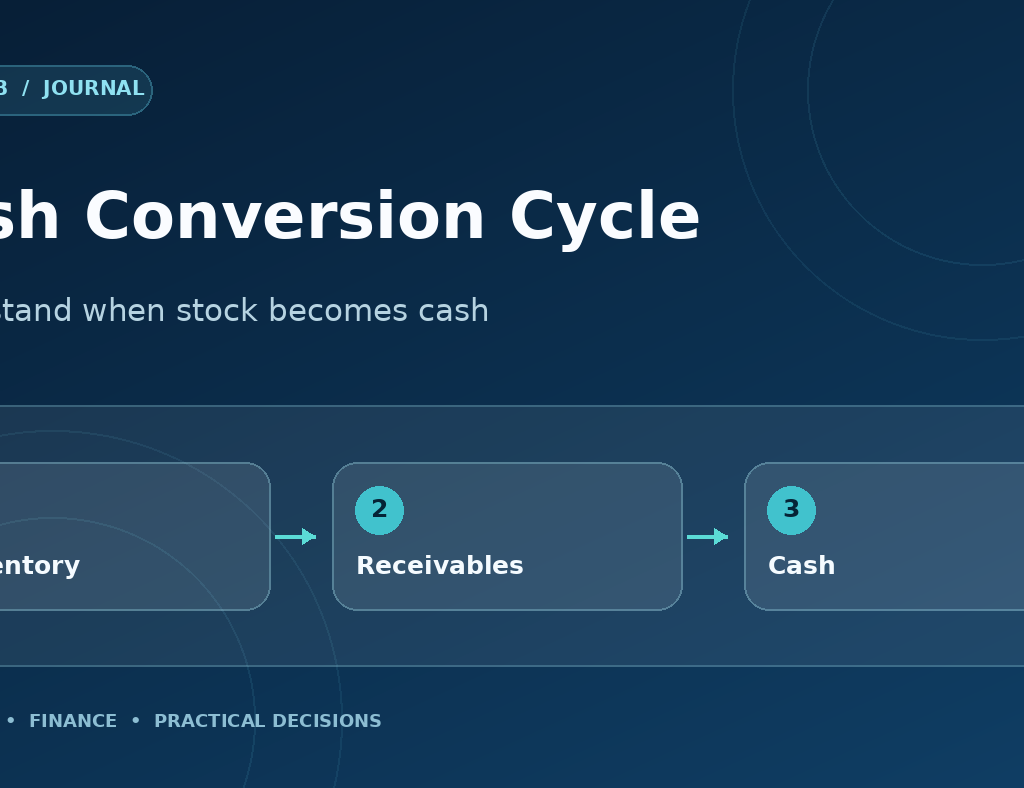
A profitable shop can still run short of cash when stock sits too long or customers pay later than suppliers must be paid. The cash conversion cycle makes that timing visible.
1 · Check the inputs2 · Compare terms3 · Keep evidence
Map the three clocks
- Inventory days: how long stock remains before it is sold. Separate fast-moving items from slow stock.
- Receivable days: how long credit customers take to pay after a sale. Count overdue amounts separately.
- Payable days: how long the business has to pay suppliers under agreed terms.
- Estimate cash conversion cycle as inventory days plus receivable days minus payable days. Use actual records, not a guess.
A practical example
Illustration: 25 days in stock + 12 days to collect − 15 days supplier credit = 22 days of cash tied up. If inventory rises to 40 days, the gap becomes 37 days unless another part of the cycle improves.
Before you act
A shorter cycle is useful only if service levels and supplier relationships remain healthy. Do not delay agreed payments merely to improve a ratio.
Official or primary reference: Rawhub Credit Centre. Check the latest terms at source before making a financial decision.